


5 Benefits of Basement Waterproofing from the Outset
Basements are regularly exposed to moisture, groundwater and hydrostatic pressure. Without treatment from the outset, water can enter through cracks, construction joints and junctions, affecting both the structure and its usability. Explore 5 benefits of early basement waterproofing and a suitable solution with LEMAN AT-14 MAX.
Contents:
1. Why should basements be waterproofed early?
2. 5 benefits of basement waterproofing from the outset
3. Basement areas that need waterproofing
4. Basement waterproofing with LEMAN AT-14 MAX
1. Why should basements be waterproofed early?
Basements sit below ground level and are often exposed to damp soil and groundwater for long periods. As the water table changes with the seasons, water exerts pressure on the base slab and concrete walls. If the structure has voids, cracks or unsealed junctions, moisture will find its way inside.
The risk of water ingress is not limited to a single surface. Water can pass through construction joints between concrete pours, around pipes penetrating walls, through slab-to-wall joints or through areas of honeycombed concrete. Waterproofing should therefore form part of the structural construction plan, rather than being carried out only after water stains appear.
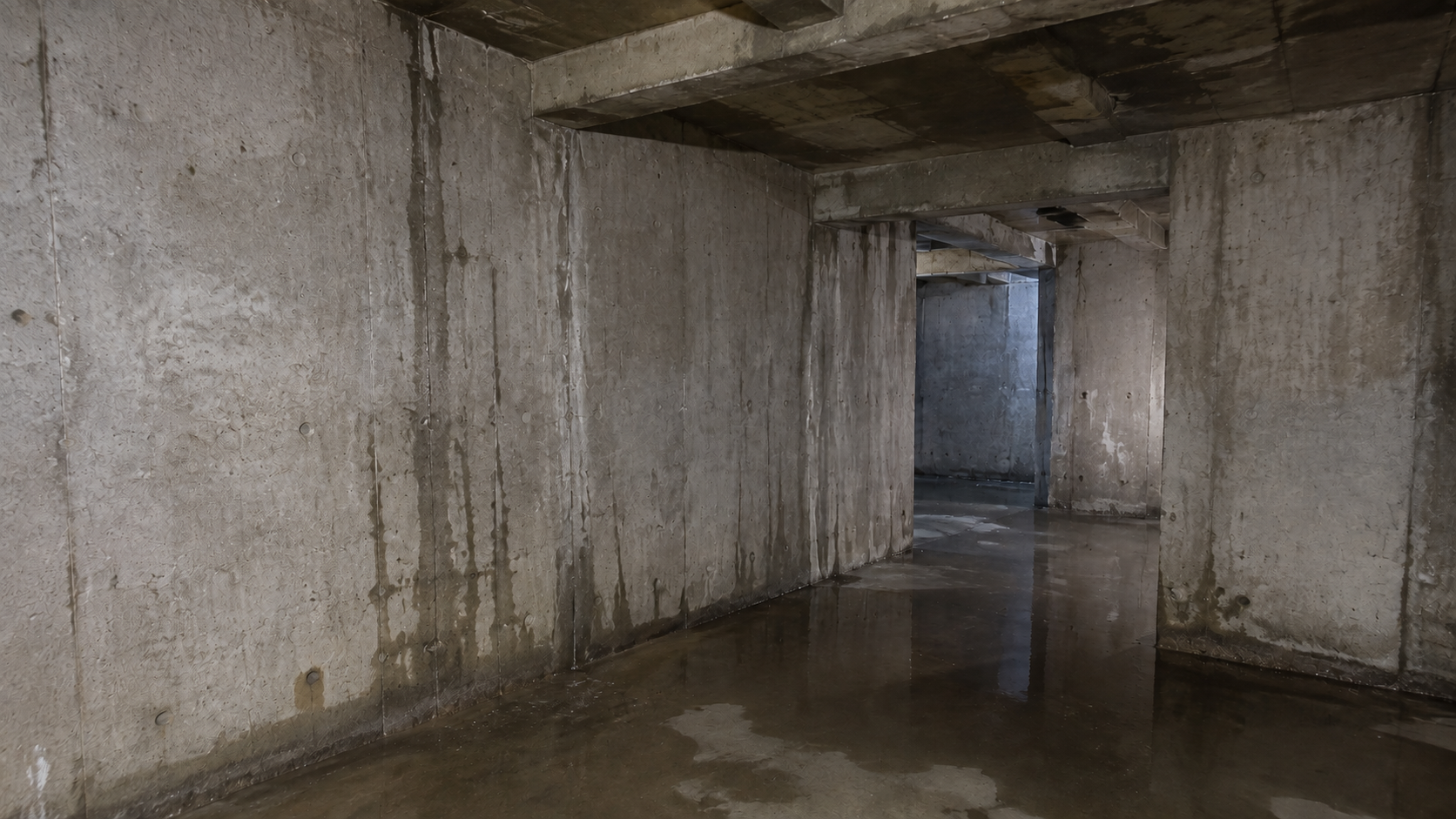
Illustration of groundwater entering through different parts of a basement structure
2. 5 benefits of basement waterproofing from the outset
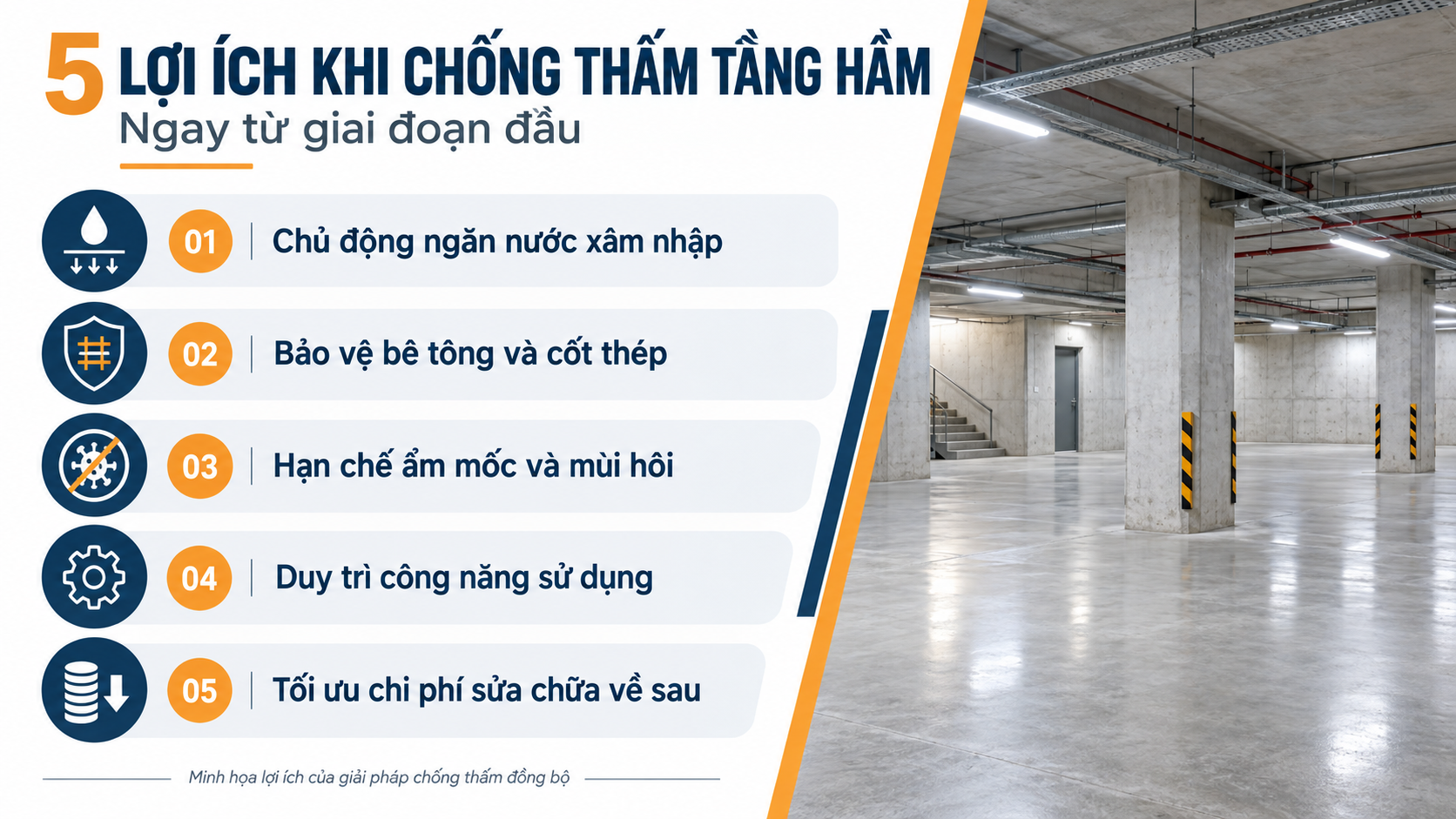
5 benefits of basement waterproofing from the outset.
2.1. Proactively prevent water ingress
The first benefit is to create a protective layer before water has a chance to pass through concrete or mortar surfaces. When high-risk areas are treated comprehensively, the building is less susceptible to water spreading from a small point to a wider area.
2.2. Protect the concrete structure and steel reinforcement
Water and prolonged moisture can travel through the capillary network or defects in concrete. With extended exposure to steel reinforcement, damp conditions can increase the risk of corrosion and affect the protective concrete cover.
2.3. Reduce mould and unpleasant odours
Basements often have limited natural ventilation. When surfaces remain damp, mould and unpleasant odours can easily develop, especially at the base of walls, in concealed corners and near pipework.
2.4. Maintain the usability of the basement
Basements may be used for parking, storage, plant rooms or spaces supporting building operations. Water ingress can create slippery surfaces, damage finishes and affect equipment located near damp areas.
2.5. Optimise future repair costs
Once a building is complete, addressing water ingress may require removing tiling, relocating equipment or working in areas that are in use. Costs then include not only materials but also labour, downtime and reinstatement of surfaces.
3. Basement areas that need waterproofing
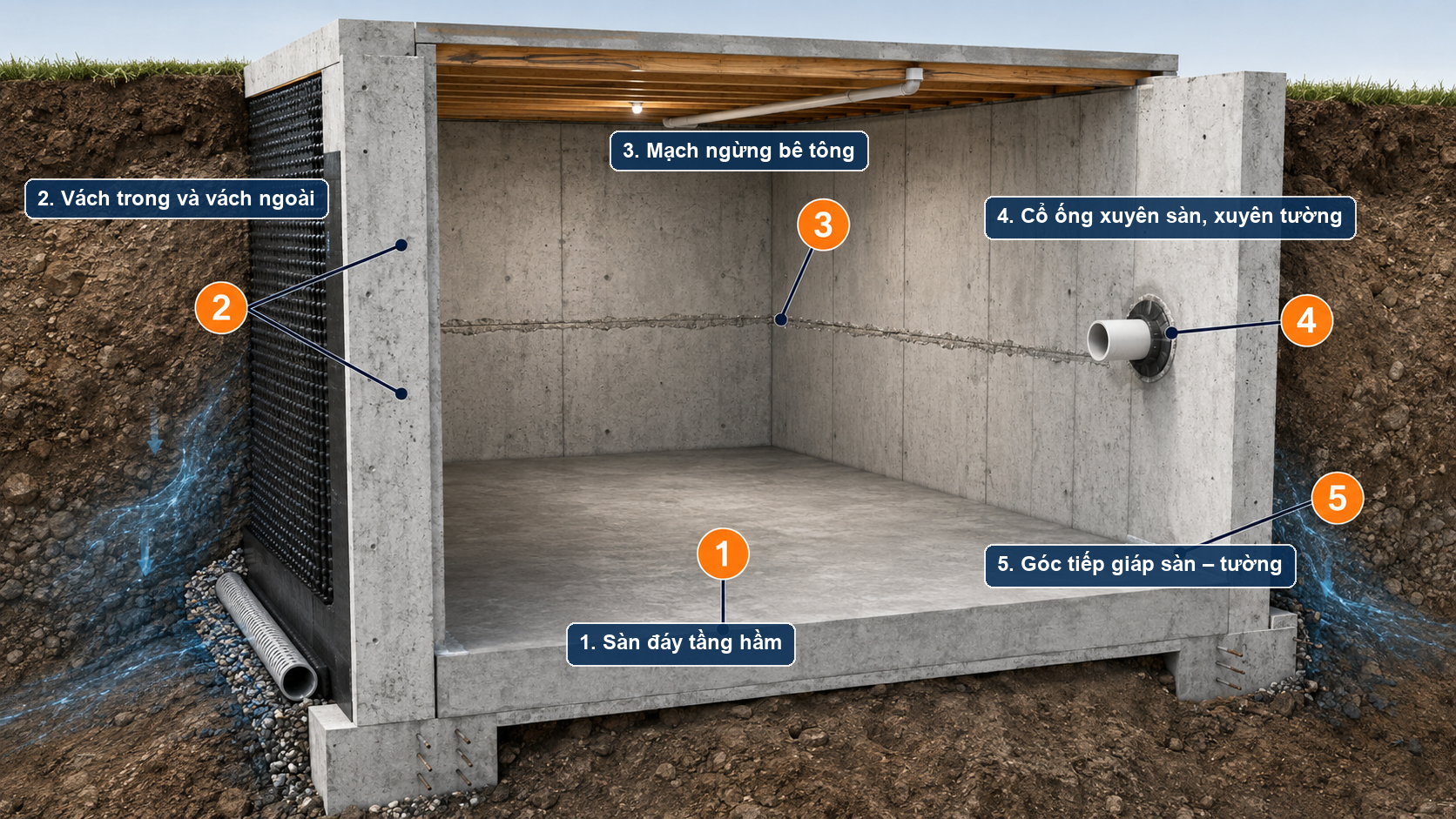
5 basement areas that need waterproofing
Areas to inspect before finishing include the base slab; internal and external walls; concrete construction joints; pipe penetrations through slabs and walls; and floor-to-wall junctions. These are locations where water can easily enter through cracks, voids or joints between materials. Surfaces must be cleaned, defects repaired and details treated in accordance with the technical specifications before applying waterproofing.
4. Basement waterproofing with LEMAN AT-14 MAX
Among waterproofing materials for concrete and mortar, LEMAN AT-14 MAX is a cement-polymer coating consisting of two pre-measured components. Once mixed, it is applied to the surface to form an elastic water barrier.
According to the manufacturer, the product is used for waterproofing and bridging hairline cracks, while also helping protect surfaces against carbon dioxide ingress. Applications include basements, water tanks, swimming pools, balconies, roof terraces, gutters, retaining walls, bathrooms, kitchens and wet areas.
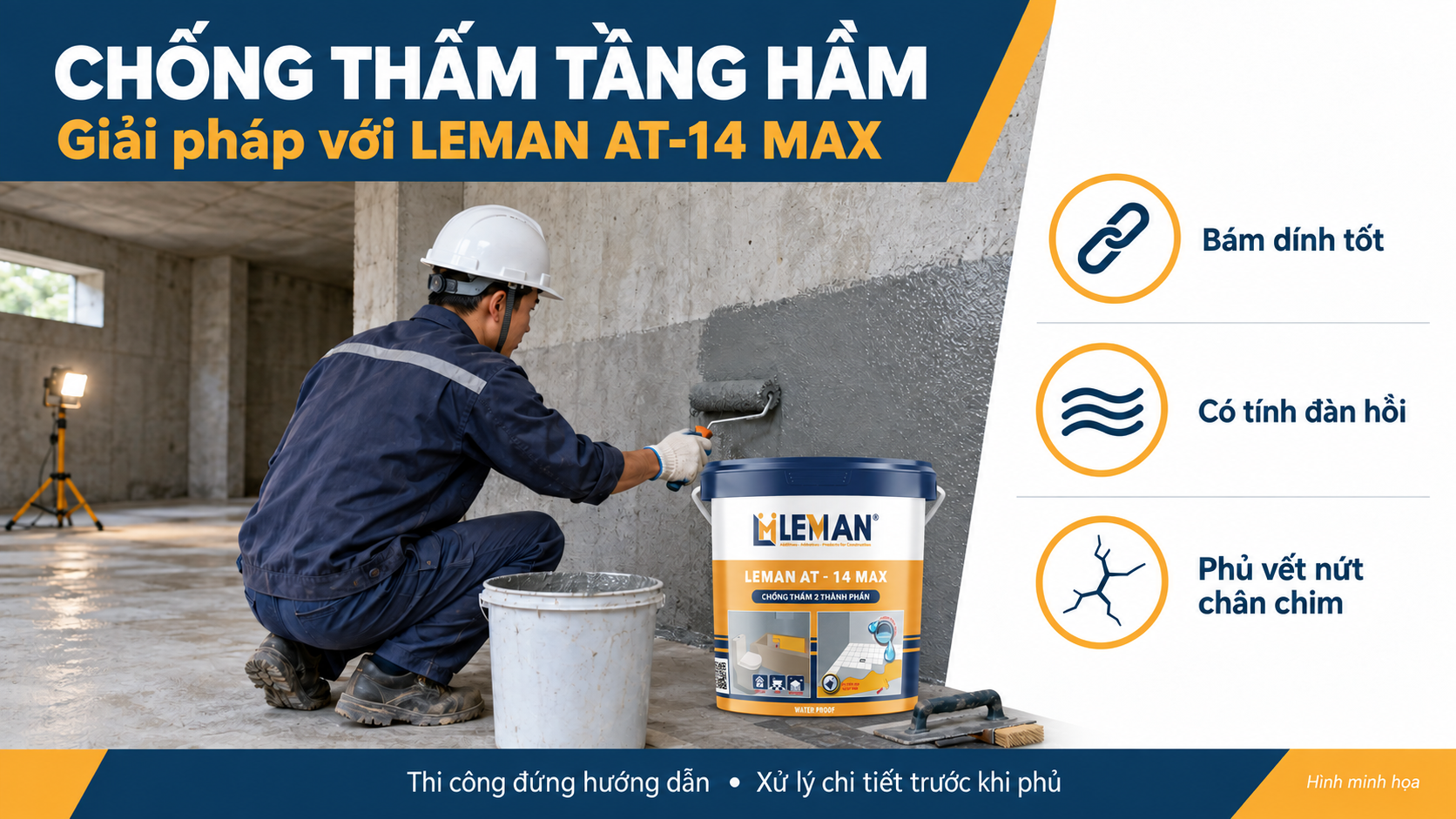
Illustration of basement waterproofing with LEMAN AT-14 MAX.
4.1. Features suited to basement areas
LEMAN AT-14 MAX adheres to sound concrete or mortar surfaces, offers elasticity and can bridge small cracks. The manufacturer states that the product contains no chlorides or other corrosive components. These features suit the mineral substrates commonly found in basements.
The two-component waterproofing format allows the liquid-to-powder mixing ratio to be controlled within each product kit. AT-14 MAX is available in 4.8 kg and 18 kg kits, making it convenient to select a size for the scale of the work. Using the correct ratio for each kit gives the mixture the required consistency without having to adjust the components independently.
4.2. Basic application procedure
Before application, concrete and mortar must be sound, clean, free of oil and grease, and suitably levelled. Highly absorbent surfaces should be saturated with clean water without leaving standing water.
Slowly add the powder component to the liquid component and mix with suitable equipment until uniform. While the surface is still damp, apply the first coat with a brush, roller or trowel, pressing the material onto the substrate to improve contact.
LEMAN recommends applying at least two coats. The indicative waiting time between the first and second coats is approximately 4 - 8 hours at 25°C. For floor applications,
the second coat should be applied after approximately 12 hours to minimise damage to the first coat. Actual temperature and humidity conditions may affect the waiting time.
4.3. Considerations before choosing
No single waterproofing material is suitable for every basement. Before choosing, assess the water source, pressure level, crack condition, access to the external face and the requirements of the finish. Active leaks, movement joints and large cracks require specific detailing solutions before the surface is coated.
LEMAN AT-14 MAX should be used within the scope, at the application rates and according to the procedures specified by the manufacturer. Applicators should wear suitable protective equipment and store the product in its original packaging in a cool, dry, well-ventilated place away from direct sunlight.
Conclusion
Basement waterproofing from the outset offers five practical benefits: proactively preventing water ingress, protecting the structure, reducing mould, maintaining usability and optimising repair costs. The effectiveness of the solution depends on the site assessment, treatment of details, choice of material system and quality of application.
For pack sizes and application instructions, see the LEMAN AT-14 MAX product. For help identifying a suitable solution for specific basement conditions, contact LEMAN for advice.
Lê Kim Ngân


.jpg)


